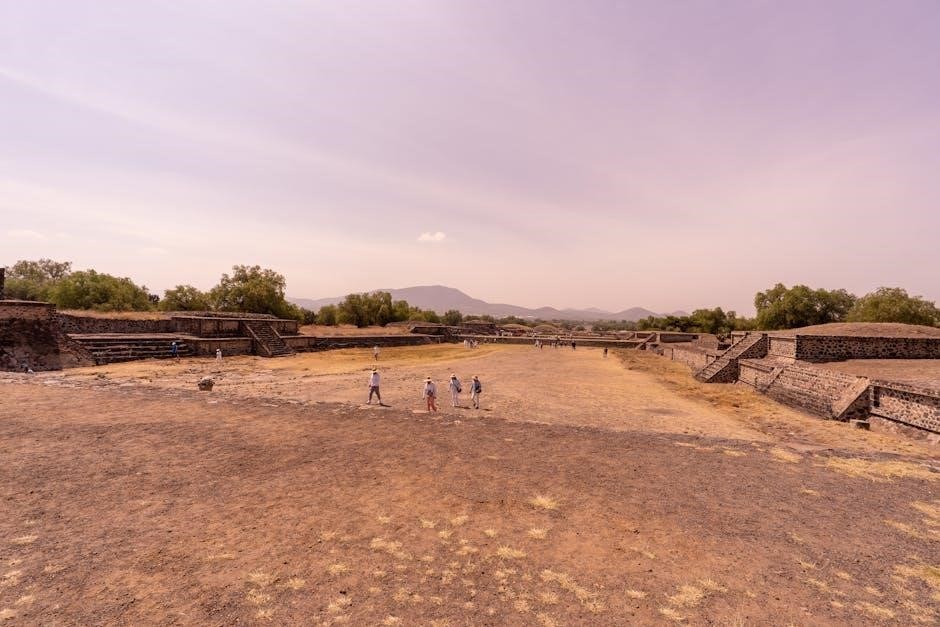
PDF resources offer detailed insights into this Bronze Age society‚ flourishing around 7000 BCE. These documents reveal a civilization as significant as Mesopotamia and Egypt.
What was the Indus Valley Civilization?
The Indus Valley Civilization (IVC)‚ also known as the Indus Civilization‚ was a Bronze Age society‚ prominent in South Asia. PDF documents detail its emergence approximately 5‚000 years ago‚ showcasing advanced urban planning and a unique script. These resources highlight a culture comparable to Mesopotamia and Egypt‚ yet distinct.
PDF files reveal a sophisticated society with evidence of trade networks extending to Central Asia. The civilization’s mysteries‚ including its undeciphered script‚ are explored within these accessible documents‚ offering a comprehensive understanding of this ancient world.
Geographical Extent and Timeline
PDF resources illustrate the Indus Valley Civilization’s expanse across northwestern South Asia‚ encompassing present-day India and Pakistan. The civilization thrived between approximately 7000 and 1900 BCE‚ with its Mature Harappan Phase from 2600-1900 BCE.
These PDF documents detail the civilization’s geographical reach and chronological phases‚ revealing a long-lasting presence. Recent discoveries‚ detailed in accessible PDF reports‚ suggest origins dating back as far as 8000 years ago‚ expanding the established timeline.
Origins and Development
PDF analyses trace the civilization’s evolution through phases: Early Harappan (7000-3200 BCE)‚ Regionalization (3200-2600 BCE)‚ and the Mature Harappan period.
Early Harappan Phase (7000-3200 BCE)
PDF studies detail the beginnings‚ around 7000 BCE‚ showcasing early farming communities and the development of distinct regional cultures. These documents illustrate a gradual shift towards settled life‚ with evidence of early pottery and rudimentary trade networks. Archaeological PDF reports highlight the emergence of small villages and the initial steps towards urbanization‚ laying the groundwork for the later‚ more complex Harappan civilization. PDF resources demonstrate a period of experimentation and adaptation‚ crucial for the civilization’s eventual flourishing‚ with evidence suggesting an 8000-year-old origin.
Regionalization Era (3200-2600 BCE)
PDF analyses reveal a period of increasing regional diversity‚ with distinct cultural traits emerging across different settlements. These documents showcase growing trade connections‚ evidenced by the distribution of goods detailed in archaeological PDF reports. PDF resources illustrate the development of proto-urban centers and increasing social complexity. This era‚ documented in numerous PDFs‚ saw the foundations for standardized practices‚ like brick sizes‚ being laid‚ preparing the way for the Mature Harappan phase and its unified urban planning.
Mature Harappan Phase (2600-1900 BCE)
PDF studies highlight this period as the zenith of the Indus Valley Civilization‚ characterized by widespread urbanization and standardized practices. Detailed PDF reports showcase advanced city planning‚ exemplified by Harappa and Mohenjo-daro. PDF resources document extensive trade networks reaching Mesopotamia‚ as evidenced by artifact distribution maps. The undeciphered Indus script‚ analyzed in PDFs‚ flourished during this time‚ alongside sophisticated craft production‚ all thoroughly documented in available PDF archives.
Key Urban Centers
PDF documents detail major cities like Harappa‚ Mohenjo-daro‚ and Dholavira‚ revealing advanced urban planning and infrastructure through archaeological findings and maps.
Harappa: A Major City
PDF reports extensively cover Harappa‚ a crucial Indus Valley Civilization urban center. These documents showcase detailed excavation maps‚ revealing standardized brick structures and advanced drainage systems. Analysis within these PDFs highlights Harappa’s significance in trade networks‚ connecting to Mesopotamia and Central Asia. They also present findings on craft production‚ including pottery and bead making‚ offering insights into daily life. Further‚ PDF resources detail the discovery of the Harappan script on seals‚ fueling ongoing decipherment efforts and providing clues about their societal structure.
Mohenjo-daro: The Great Bath and Urban Planning
PDF analyses of Mohenjo-daro emphasize its remarkable urban planning‚ notably the “Great Bath.” These documents detail the sophisticated drainage systems and standardized brick construction evident throughout the city. PDF reports showcase grid-pattern layouts and residential structures‚ illustrating a highly organized society. Archaeological findings‚ presented in PDF format‚ reveal public structures and insights into daily life. They also explore the function of the Great Bath‚ suggesting ritualistic or communal purposes‚ contributing to our understanding of Indus Valley beliefs.
Dholavira: Unique Water Management System
PDF studies of Dholavira highlight its advanced water conservation strategies‚ a key feature of the Indus Valley Civilization. These documents detail the city’s reservoirs‚ stepwells‚ and channels‚ demonstrating ingenious rainwater harvesting techniques. PDF reports showcase the sophisticated dam and embankment systems‚ protecting against floods and ensuring a reliable water supply. Archaeological PDFs reveal a focus on water management‚ crucial for survival in a semi-arid environment‚ and a testament to their engineering prowess.
Lothal: A Port City and Maritime Trade
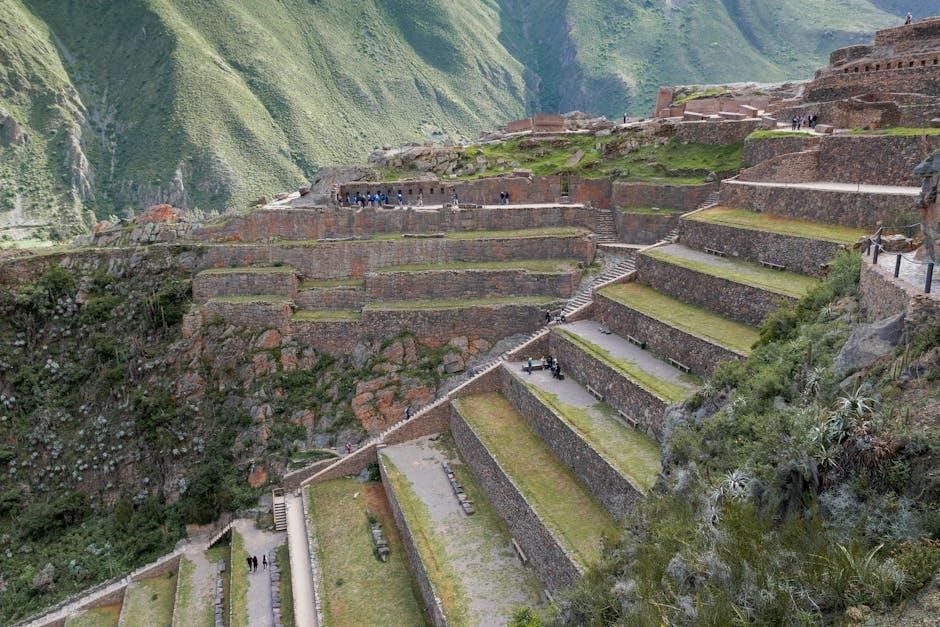
PDF analyses of Lothal confirm its status as a vital port city within the Indus Valley Civilization‚ facilitating extensive maritime trade. Archaeological PDFs detail the discovery of a dockyard‚ suggesting advanced shipbuilding and navigation skills. These documents illustrate trade networks extending to Mesopotamia‚ evidenced by Indus seals found there‚ as detailed in PDF reports. PDF resources showcase Lothal’s role in exchanging goods like pottery‚ beads‚ and potentially timber‚ highlighting its economic importance.
Urban Planning and Architecture
PDF studies reveal a sophisticated grid pattern and standardized brick sizes in Indus cities‚ alongside advanced drainage systems‚ as documented in archaeological PDFs.
Grid Pattern and Standardized Brick Sizes
PDF reports detailing Indus Valley urban planning consistently highlight a remarkably precise grid layout for cities like Mohenjo-daro and Harappa. This demonstrates advanced planning and engineering. Crucially‚ PDF analyses reveal the consistent use of standardized brick sizes throughout the civilization.
These bricks‚ often in a ratio of 4:2:1‚ facilitated efficient construction and suggest centralized control over production. Archaeological PDFs showcase how this standardization contributed to the uniformity and durability of Indus structures‚ a key feature of their architectural prowess.
Advanced Drainage Systems
PDF documents focusing on Indus Valley sanitation reveal exceptionally sophisticated drainage systems. These systems‚ detailed in archaeological reports available as PDFs‚ demonstrate a profound understanding of urban hygiene. Houses connected to covered drains along streets‚ preventing sewage issues.
PDF analyses show these drains were regularly cleaned and maintained‚ indicating a strong civic sense. The meticulous planning‚ illustrated in PDF diagrams‚ highlights a level of public health infrastructure unparalleled in contemporary civilizations‚ showcasing their engineering skills.
Residential Buildings and Public Structures
PDF reports detailing Indus Valley architecture showcase standardized brick construction for homes‚ varying in size suggesting social hierarchy. PDF analyses reveal multi-room dwellings‚ often with courtyards and private wells. Public structures‚ like the Great Bath at Mohenjo-daro‚ are extensively documented in PDFs.
These PDF resources illustrate granaries‚ citadels‚ and assembly halls‚ indicating complex societal organization. Detailed plans within PDFs demonstrate advanced building techniques and urban planning‚ offering insights into daily life.
Economy and Trade
PDF documents illustrate a thriving agricultural economy‚ alongside craft production like pottery and beads. PDFs detail extensive trade networks reaching Mesopotamia and Central Asia.
Agriculture and Irrigation
PDF resources reveal the Indus Valley Civilization’s economic foundation rested upon a robust agricultural system. Detailed analyses within these documents demonstrate cultivation of crops like wheat and barley. PDFs showcase evidence of sophisticated irrigation techniques‚ crucial for thriving in the region’s climate. These systems likely included canals and reservoirs‚ maximizing crop yields. The availability of PDFs allows researchers to study farming practices and understand how they supported a large population‚ contributing to the civilization’s prosperity and sustainability.
Craft Production: Pottery‚ Beads‚ and Metallurgy
PDF documents detailing the Indus Valley Civilization highlight remarkable craft specialization. These resources illustrate mastery in pottery‚ producing functional and decorated vessels. PDF analyses reveal extensive bead production‚ utilizing materials like carnelian and steatite for adornment and trade. Furthermore‚ PDFs demonstrate metallurgical skills‚ including copper and bronze working. Access to these PDFs allows detailed study of techniques‚ tools‚ and the economic significance of these crafts within Indus society.
Trade Networks: Mesopotamia‚ Central Asia‚ and Beyond
PDF resources on the Indus Valley Civilization reveal extensive trade networks. These PDFs detail connections with Mesopotamia‚ evidenced by shared artifacts and seals. Further PDF analysis indicates trade routes extending into Central Asia‚ facilitating exchange of goods and ideas. Accessing these PDF documents provides insights into the scale and complexity of Indus trade‚ demonstrating their economic power and influence across a vast geographical area‚ as documented in scholarly PDF reports.

The Indus Script
PDF analyses showcase the Indus script’s mystery‚ utilizing boustrophedon writing—alternating left-to-right and right-to-left—despite centuries of research‚ as detailed in PDFs.
Characteristics of the Script
PDF documents reveal the Indus script as pictographic‚ featuring around 400 distinct signs. These symbols‚ often found on seals‚ appear non-alphabetic and haven’t been deciphered yet. PDF analyses highlight its unique boustrophedon style – reading direction alternates in each line. The average inscription length is quite short‚ typically only five signs.
PDF resources demonstrate that the script’s purpose remains debated‚ potentially used for economic transactions‚ religious rituals‚ or administrative records. The limited textual evidence complicates understanding its structure and meaning‚ as explored in numerous scholarly PDFs.
Attempts at Decipherment
PDF studies detail over a century of failed attempts to decipher the Indus script. Early efforts‚ detailed in accessible PDF reports‚ proposed links to Dravidian languages‚ but lacked conclusive evidence. More recent computational analyses‚ often available as PDF downloads‚ explore statistical patterns within the script.
Despite these efforts‚ a universally accepted decipherment remains elusive‚ as outlined in comprehensive PDF overviews. The script’s brevity and lack of bilingual texts hinder progress‚ making definitive interpretations challenging‚ as many academic PDFs confirm.
The Significance of the Script
PDF analyses emphasize the script’s importance for understanding Indus society‚ despite remaining undeciphered. Accessing PDF resources reveals it’s a key to unlocking administrative‚ economic‚ and religious practices. The boustrophedon style‚ detailed in scholarly PDFs‚ suggests a sophisticated writing system.
Further‚ PDF documents highlight that decipherment could reveal insights into their language and worldview‚ comparable to Mesopotamian cuneiform; Its very existence‚ documented in numerous PDFs‚ demonstrates a complex level of cultural development.
Religion and Beliefs
PDF studies detail evidence of religious practices‚ including the ‘Pashupati’ seal—potentially a proto-Shiva—and numerous Mother Goddess figurines‚ as revealed in reports.
Evidence of Religious Practices
PDF documents showcase intriguing evidence suggesting religious beliefs within the Indus Valley Civilization. Archaeological findings‚ detailed in these resources‚ include seals depicting ritualistic scenes and animal motifs. The prominent ‘Pashupati’ seal‚ often interpreted as a proto-Shiva figure‚ hints at early yogic traditions or deity worship.
Furthermore‚ abundant terracotta Mother Goddess figurines suggest reverence for fertility and feminine power. These PDF analyses also explore potential connections to later Hindu traditions‚ though definitive interpretations remain elusive due to the undeciphered script.
The Pashupati Seal and Proto-Shiva
PDF analyses of the Indus script frequently highlight the enigmatic ‘Pashupati’ seal. Depicting a seated figure‚ possibly human‚ surrounded by animals‚ it’s often linked to early forms of Shiva. These PDF resources detail interpretations suggesting a proto-Shiva‚ a precursor to the Hindu deity‚ representing a yogic ascetic or a lord of animals.
However‚ scholarly debate continues‚ with some arguing against a direct connection. Detailed images and contextual analyses within these PDF documents allow for independent evaluation of this significant artifact.
Mother Goddess Figurines
PDF reports on Indus Valley Civilization archaeology consistently showcase numerous terracotta Mother Goddess figurines; These depictions‚ often stylized and adorned with elaborate headdresses‚ suggest a reverence for fertility and feminine power. PDF analyses explore their potential roles in domestic shrines or as symbols of abundance.
These resources detail variations in style across different sites‚ hinting at regional interpretations of the goddess. Examining these PDF documents provides a comprehensive overview of this prevalent religious motif.
Society and Governance
PDF studies suggest social stratification existed‚ though governance structures remain debated. Archaeological PDFs offer clues‚ but definitive answers are still elusive.
Social Stratification
PDF analyses of Indus Valley Civilization sites reveal potential social hierarchies; Variations in house sizes and access to resources‚ detailed in archaeological PDF reports‚ suggest differing levels of wealth and status. Larger structures with elaborate features likely belonged to elites‚ while simpler dwellings housed commoners. PDF documentation of grave goods also indicates distinctions‚ with some burials containing more valuable artifacts than others. However‚ the absence of overtly opulent displays‚ compared to Mesopotamia or Egypt‚ suggests a relatively egalitarian society‚ as explored in numerous scholarly PDFs; Further research‚ accessible through online PDF archives‚ continues to refine our understanding of Indus social structures.
Political Organization: Theories and Debates
PDF studies examining the Indus Valley Civilization reveal ongoing debates regarding its political structure. The uniformity of city planning‚ detailed in archaeological PDF reports‚ suggests centralized authority‚ potentially a state-level governance. However‚ the lack of monumental structures typical of ancient empires‚ as discussed in academic PDFs‚ challenges this view. Alternative theories‚ presented in various PDF publications‚ propose a network of independent city-states or a more decentralized system. PDF analyses of trade networks hint at elite merchant control. Ultimately‚ the precise political organization remains elusive‚ requiring further investigation through PDF-accessible research.
Decline and Transformation
PDF documents explore theories—climate change‚ invasion—explaining the Indus Valley Civilization’s decline around 1900 BCE‚ transitioning into the Late Harappan Phase.
Theories Regarding the Decline (Climate Change‚ Invasion‚ etc.)
PDF analyses detail multiple hypotheses for the Indus Valley Civilization’s collapse. Climate change‚ specifically shifting monsoon patterns and prolonged droughts‚ is a prominent theory‚ impacting agriculture. Some suggest Aryan invasions‚ though evidence remains debated. PDF resources also explore river course changes‚ leading to agricultural disruption and societal stress.
Furthermore‚ ecological factors and internal societal shifts are considered. Accessing these PDF documents provides a comprehensive understanding of the complex interplay of factors potentially contributing to this ancient civilization’s transformation.
The Late Harappan Phase (1900-1300 BCE)
PDF studies illustrate a period of decentralization and regional variation following the Mature Harappan Phase. Urban centers diminished in size‚ and standardized practices declined. PDF resources detail shifts in material culture‚ pottery styles‚ and settlement patterns.
Trade networks contracted‚ and local traditions became more pronounced. Accessing these PDF documents reveals a transition‚ not a complete disappearance‚ with continuity in some aspects of life. This phase represents a crucial period of transformation and adaptation within the broader Indus Valley region.
Continuity and Change in the Region
PDF analyses demonstrate that despite the decline‚ elements of Indus Valley Civilization persisted. PDF resources highlight continuities in pottery traditions‚ agricultural practices‚ and religious beliefs across subsequent cultures.
However‚ significant changes occurred in social organization and political structures. Examining these PDF documents reveals a complex interplay between abandonment and adaptation. The region witnessed the emergence of new regional identities‚ building upon‚ yet diverging from‚ the Harappan legacy.
Archaeological Discoveries and Research
PDF reports detail significant excavations‚ including findings by the ASI‚ and recent discoveries suggesting the civilization dates back 8‚000 years.
Significant Excavations and Findings
PDF documents showcase crucial excavations at Harappa and Mohenjo-daro‚ revealing advanced urban planning and standardized brick construction. These reports detail the discovery of the Great Bath‚ intricate drainage systems‚ and numerous artifacts. Further PDF analyses present findings from Dholavira’s unique water management and Lothal’s port facilities.
Recent PDF publications highlight IIT-Kharagpur and ASI’s work‚ uncovering evidence pushing the civilization’s origins back to at least 8‚000 years ago‚ challenging previous timelines.
Role of the Archaeological Survey of India (ASI)
PDF reports detail the Archaeological Survey of India’s (ASI) pivotal role in excavating and preserving Indus Valley Civilization sites. These documents showcase ASI’s collaborative efforts with institutions like IIT-Kharagpur‚ leading to groundbreaking discoveries. PDF analyses present findings regarding the civilization’s extended timeline‚ now potentially reaching 8‚000 years ago.
The ASI’s PDF publications are essential for understanding excavation methodologies and artifact analysis‚ contributing significantly to our knowledge of this ancient culture.
Recent Research and New Discoveries (e.g.‚ 8000-year-old evidence)
PDF reports now document evidence suggesting the Indus Valley Civilization’s origins extend back at least 8‚000 years‚ challenging previous timelines. These findings‚ detailed in accessible PDF formats‚ stem from collaborative research between IIT-Kharagpur and the ASI. PDF analyses showcase discoveries reshaping our understanding of early settlements.
These PDF resources highlight the ongoing refinement of historical narratives‚ demonstrating the civilization’s greater antiquity than previously believed.
The Indus Valley Civilization PDF Resources
PDF documents provide comprehensive studies of the Indus Valley Civilization‚ offering accessible research and detailed findings for students and enthusiasts alike.
Availability of Online PDFs
Numerous online platforms host PDF documents detailing the Indus Valley Civilization‚ ranging from academic papers to educational resources. Institutions like the Archaeological Survey of India (ASI) often publish reports available as PDFs. Websites dedicated to ancient history and archaeology frequently compile these resources‚ offering free downloads.
Specifically‚ a PDF titled “1709290014” provides an overview‚ while broader searches yield scholarly articles and digitized books. These PDFs are invaluable for researchers and students seeking in-depth knowledge.
Importance of PDF Documents for Study
PDF documents offer a concentrated and accessible format for studying the Indus Valley Civilization. They preserve detailed archaeological findings‚ scholarly interpretations‚ and visual representations – crucial for understanding this ancient culture.
Unlike fragmented online articles‚ PDFs provide comprehensive overviews‚ aiding research and note-taking. The availability of digitized reports from the ASI and academic publications in PDF format democratizes access to vital information‚ fostering deeper engagement with this fascinating civilization.
Legacy and Influence
PDF resources demonstrate the Indus Valley Civilization’s impact on later Indian societies‚ particularly in urban planning and engineering‚ shaping regional development.
Impact on Later Indian Civilizations
PDF documents detailing the Indus Valley Civilization reveal a profound legacy influencing subsequent Indian cultures. The sophisticated urban planning‚ standardized brick sizes‚ and advanced drainage systems—all thoroughly documented—likely impacted later settlements.
Furthermore‚ certain religious motifs‚ like potential precursors to Shiva found on seals‚ suggest continuity of belief. Accessing these PDF resources allows researchers to trace the evolution of Indian civilization‚ demonstrating how the Indus Valley’s innovations resonated through millennia‚ shaping societal structures and technological advancements.
Contribution to Urban Planning and Engineering
PDF analyses of Indus Valley sites showcase remarkable urban planning and engineering prowess. The grid-pattern layouts‚ standardized brick dimensions‚ and exceptionally advanced drainage systems—detailed in numerous PDF reports—demonstrate a sophisticated understanding of sanitation and civic design.
These innovations‚ documented extensively‚ represent a significant leap forward for the time. Studying these PDF resources reveals techniques potentially influencing later urban developments across the Indian subcontinent‚ highlighting their lasting impact.
Comparison with Other Ancient Civilizations
PDF studies compare the Indus Valley Civilization to Mesopotamia and Egypt‚ noting unique aspects like advanced planning‚ while acknowledging shared Bronze Age characteristics.
Mesopotamia and Egypt: Similarities and Differences
PDF analyses reveal that the Indus Valley Civilization‚ like Mesopotamia and Egypt‚ was a significant Bronze Age society. All three developed urban centers and complex social structures. However‚ the Indus script remains undeciphered‚ unlike Mesopotamian cuneiform and Egyptian hieroglyphs. PDF resources highlight the Indus Valley’s emphasis on standardized urban planning and sanitation‚ potentially exceeding contemporary practices in Mesopotamia and Egypt. While Mesopotamia and Egypt are known for monumental architecture celebrating rulers‚ the Indus Valley prioritized communal facilities like the Great Bath. PDF documents also show differing artistic styles and religious iconography.
Unique Aspects of the Indus Valley Civilization
PDF studies emphasize the Indus Valley’s distinctive features. Its grid-patterned cities and advanced drainage systems were unparalleled. The undeciphered Indus script remains a central mystery‚ unlike those of Mesopotamia and Egypt‚ as detailed in PDF reports. PDF resources showcase a focus on standardization – brick sizes‚ weights‚ and measures – suggesting centralized planning. Furthermore‚ the relative lack of monumental structures celebrating individual rulers‚ contrasted with other civilizations‚ is highlighted in PDF analyses. The civilization’s peaceful nature‚ lacking widespread evidence of warfare‚ is also a unique aspect explored in these documents.